
AI Historical Scene Reconstruction and Literary Imagery:The Uprising MomentAnd a Peach Blossom Spring Hands-On
The core of a humanities scene reconstruction prompt is “background + key moment + style atmosphere + detail restoration”: clarify the event’s background and key moment (character poses, environmental details, mood baseline), specify the visual style and scene atmosphere — cartoons for primary-school fun, realism for middle-school rigor.
What You’ll Take Away
History Hands-On: The Dazexiang Uprising Scene
Humanities scene reconstruction is the key path connecting abstract humanities content with concrete visual expression — historical events need scene construction to convey the era’s atmosphere and emotional core, requiring both historical fidelity and artistic power. When writing the prompt, clarify the event’s background and key moments, specify the visual style and scene atmosphere, and highlight the details that must be reconstructed. Let’s start with a history hands-on.
Step 1: open Puyo AI’s image generation interface, click the “Model” button, set the image model to “Puyo AI Standard”, and enter the prompt in the input box:
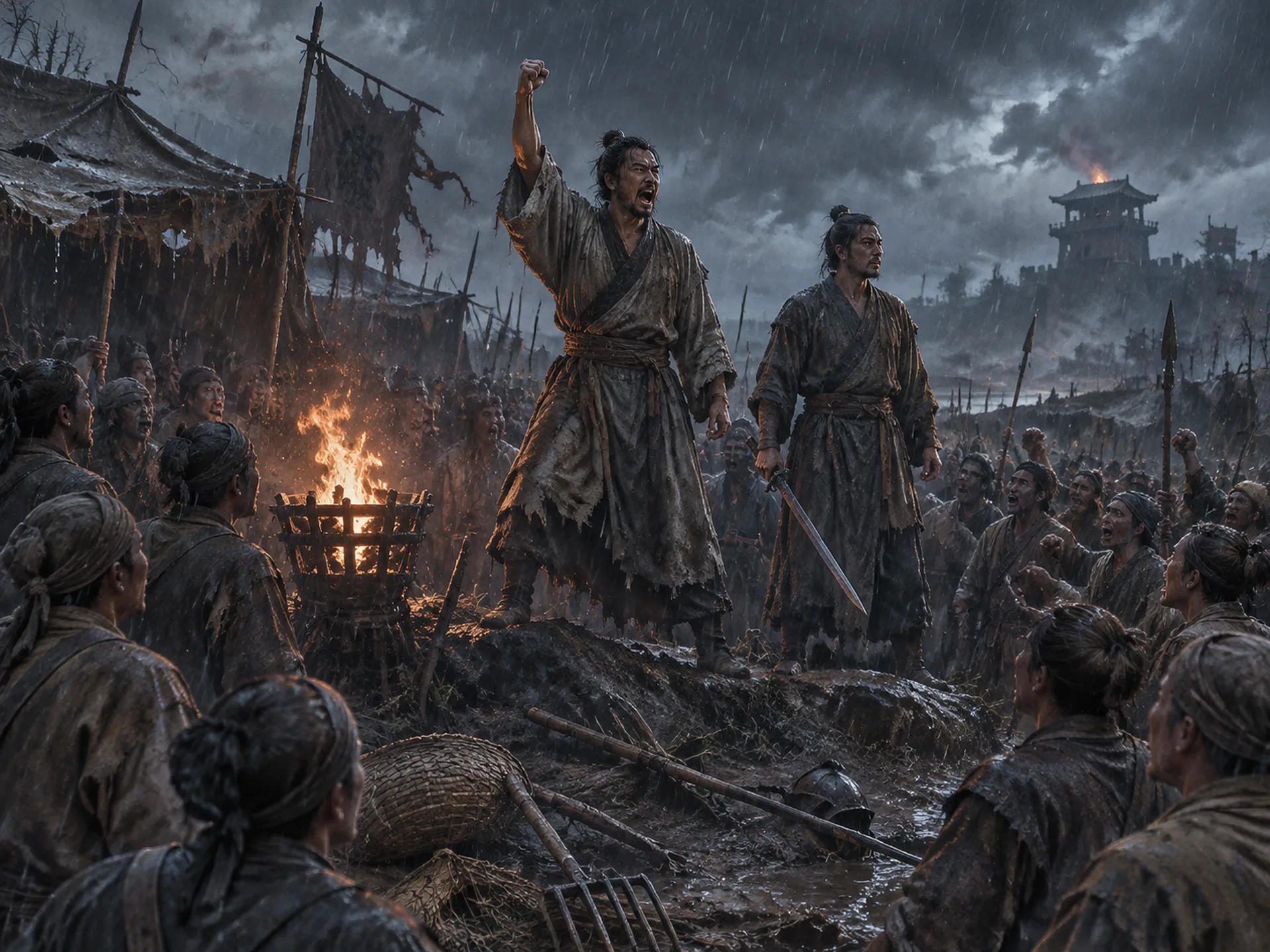
Generate a scene restoration image of Chen Sheng and Wu Guang’s uprising at Daze Township, ancient Chinese realistic painting style, somber cold gray tones, rainy night atmosphere. Core of the scene: in the muddy Daze Township camp, Chen Sheng stands on a raised place raising his arm and shouting, Wu Guang stands beside him with a sword, while the garrison soldiers gather around—their clothes are ragged, their expressions grief-stricken and indignant. Campfires flicker in the rain, the tents are old and leaking; the background shows a gloomy sky, muddy roads, and the blurred beacon towers of Qin soldiers in the distance. Farm tools and weapons are scattered on the ground. Detail the rough cloth of the soldiers, Chen Sheng’s passionate expression, and the dancing light and shadow of the flames in the rain. The overall atmosphere is solemn, stirring, and heroic, accurately restoring the key moment of the uprising, with both historical weight and realistic scene detail.
How to: set the model to “Puyo AI Standard”, enter the prompt, set the ratio to 4:3, the resolution to 2K, and the number of images to 1, then click “Create”.
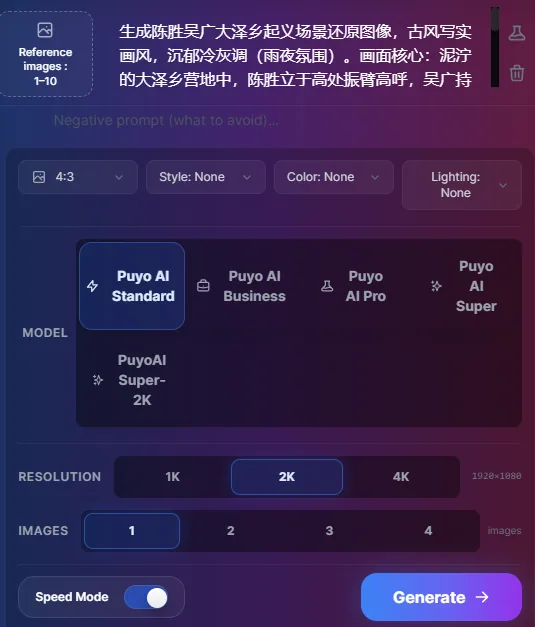
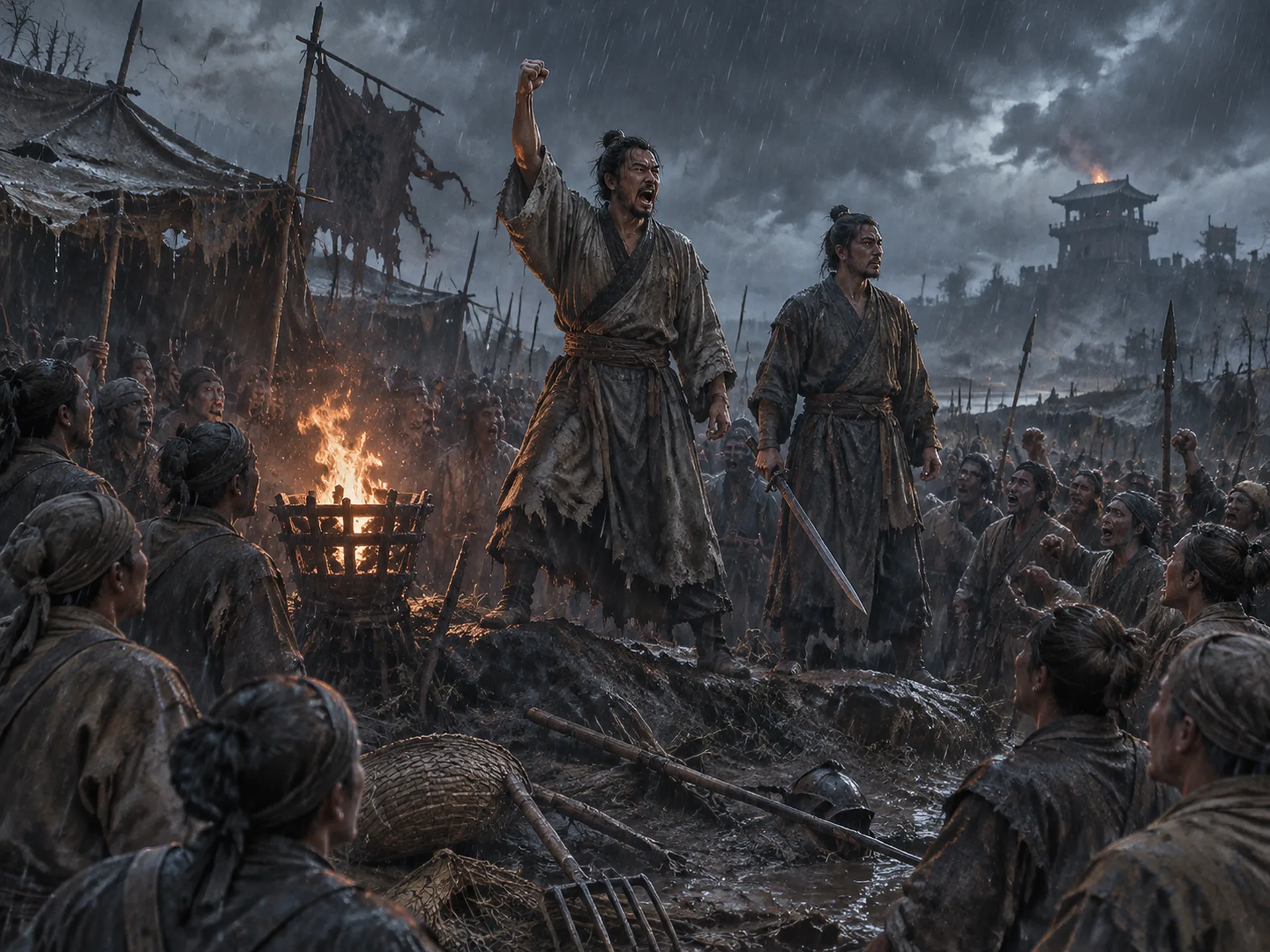
Figure 1-6: Dazexiang Uprising — Three Layers of Reconstruction: Character Positions, Environmental Details and Atmosphere
Notice the “information layering” in this prompt: the character layer (Chen Sheng raising his arm from high ground, Wu Guang standing beside with a sword, garrison soldiers gathered around) carries the narrative; the environment layer (a muddy camp, worn tents, scattered farm tools and weapons) sets the circumstances; the atmosphere layer (cool gray tones, a rainy night, dancing bonfire light) carries the emotion — with all three layers in place, the sense of historical weight stands firm.
Literature Hands-On: The Ink-Wash Scene of The Peach Blossom Spring
Literary imagery illustrations focus on “restoring the mood”: translate the scenery checklist in classical Chinese into visual elements. Step 1: set the image generation model to “Puyo AI Standard” and enter the prompt in the input box:
Generate a classic scene restoration image from The Peach Blossom Spring, ink-wash painting with light color, fresh and elegant tones. Core of the scene: a Wuling fisherman rows a wooden boat through a narrow mountain pass, with peach blossoms in full bloom on both banks and pink petals falling; ahead, the view suddenly opens into a bright and spacious land—fertile fields, beautiful ponds, mulberry and bamboo surrounding the village. Villagers in Wei-Jin style plain clothes are either farming, weaving, or watching children play; houses are scattered in orderly arrangement, and a clear stream murmurs by. In the distance, green mountains roll continuously, wreathed in mist and clouds. Detail the peach blossom branches, villagers’ expressions, and pastoral crops. The overall atmosphere is peaceful and harmonious, accurately restoring the poetic scene of the “Land of Peach Blossoms,” combining classical ink-wash beauty with literary imagery.
How to: set the model to “Puyo AI Standard”, enter the prompt, set the ratio to 4:3, the resolution to 2K, and the number of images to 1, then click “Create”.
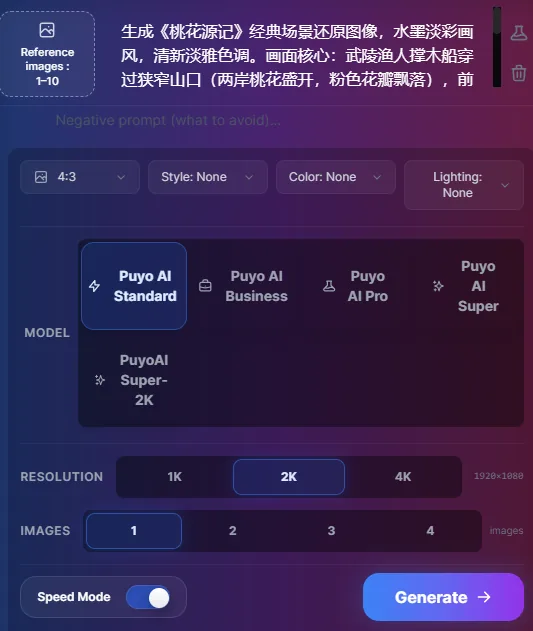
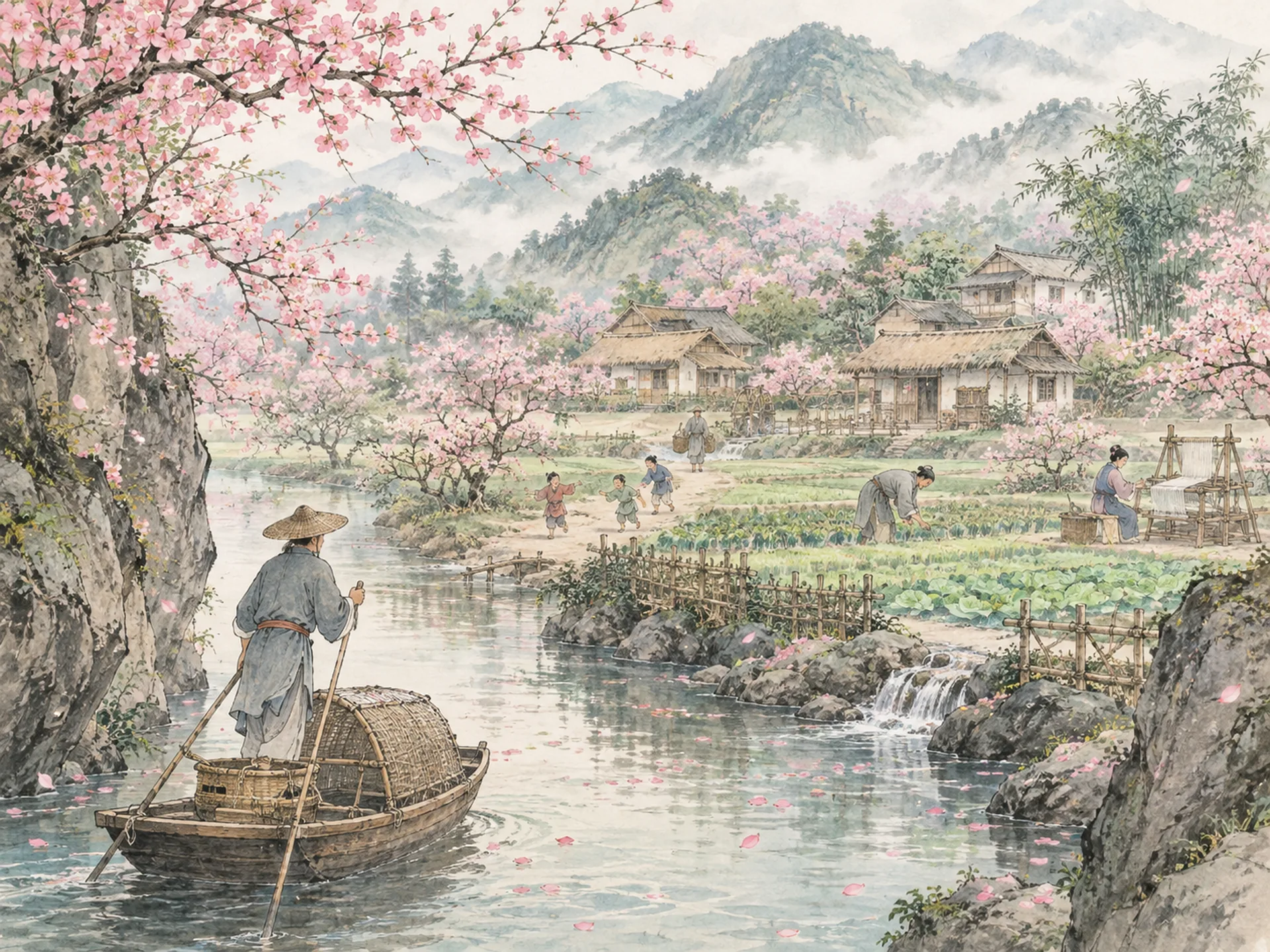
Figure 1-7: The Peach Blossom Spring — Spatial Storytelling of “a Sudden Opening” + Imagery Reconstruction via a Scenery Checklist
The secret of literary illustration is “translation”: turn “the land is flat and wide, the houses neat and orderly” into “surrounded by fertile fields, beautiful ponds, mulberry and bamboo, with houses neatly arranged”, and “the elderly and children living happily” into “some farming, some weaving, some children at play” — only when the classical Chinese mood lands on concrete scenery does the picture have something to hold onto.
Writing Essentials for Humanities Scene Reconstruction
After two hands-ons, the humanities scene reconstruction formula can be summed up as:Pick the Key MomentHistory captures “key moments” (the uprising erupting, the declaration being made), literature captures “core imagery” (a sudden opening, falling peach blossoms);Set the AtmosphereSet the mood first with the trio of weather, color tone and light;List the DetailsName clothing, props and architecture item by item so historical and textual authenticity land in concrete details;Adjust the Style by Grade LevelCartoon and realistic styles each have their place. The next article moves into teaching-material creation: character recognition cards and behavior-guide diagrams.
FAQFrequently Asked Questions
The questions beginners ask most about this guide
How Do You Keep Historical Scene Reconstruction from Becoming “Fanciful Retelling”?
Keep Details Close to Historical RecordsIn the example, the garrison soldiers are “in ragged clothes with grief and anger on their faces”, the tents are worn and leaking in the rain, and Qin beacon fires glow in the distance — every detail matches the historical background; write “precisely reconstruct the key moment the uprising erupts” in the prompt and AI will present it with realistic logic.
How Do You Get the Scale Right in Literary Illustrations?
Concrete but Not RestrictiveStay close to the core scene, character images or key plot beats, but preserve room for the reader’s imagination on top of reconstructing the core elements — for example, focus The Peach Blossom Spring on the moment of “a sudden opening” rather than cramming every detail of the text into one image.
How Do You Write the Atmosphere of a Classical Chinese-Style Scene?
The Weather + Color Tone + Light TrioDazexiang uses “somber cool-gray tones (rainy-night mood) + flickering bonfire”, The Peach Blossom Spring uses “fresh, elegant tones + swirling mist and clouds” — once the atmosphere words are set, the image’s historical emotion is set.
What Is the Difference Between Primary-School and Middle-School Humanities Illustrations?
Primary School Simplifies Actions and Scene Elements with a Cartoon Style for Fun;Middle School Restores Causal Logic and Deeper Imagery with a Realistic Style for Greater RigorOne source, two depths — choose by grade level.
How Do You Illustrate the “Pictureless” Mood of a Literary Work?
Capture the ImageryIn The Peach Blossom Spring, “fertile fields, beautiful ponds, mulberry and bamboo”, “neatly arranged houses” and “the elderly and children” are all directly visualizable images — translate the classical Chinese into a concrete list of scenery and the mood emerges naturally.
What Ratio Suits Humanities Illustrations?
4:3 Is Recommended for Narrative ScenesBoth examples use 4:3 + 2K + image count 1 — a horizontal frame fits group scenes and spatial depth and also suits courseware and textbook layouts.
About the Author: Julia, Veteran AI Image Creator
I have long used AI image generation tools for courseware diagrams, teaching cards and memory aids, and have guided many complete beginners. Every case, prompt, setting and screenshot in this article comes from real generation records on the Puyo AI platform — not theory, not stitched-together stock material. After humanities scenes, the next article moves into early-years teaching materials: character recognition cards, behavior-guide diagrams and safety comics.
Content adapted and polished from the original material “From Novice to AI Art Pro | Complete Hands-On Tutorial Collection”, with all original prompts and figures preserved. Source: https://www.puyoai.com。
Turn a Text into a Painting
Open the Puyo AI website, pick a historical event or text you’re teaching, and generate a hero scene image ready for your slides.
Results are affected by model version and randomness—the same prompt will vary slightly each time it runs; run it a couple of rounds before drawing conclusions.