AI Master Painting Styles and Chinese Style:Van Gogh Oil Paintingand Origami Peacock Hands-On Practice
The Key to Master Styles Is “Brushwork and Color”: Van Gogh = swirling strokes + bright yellow and cobalt blue; Monet = hazy strokes + Impressionist light. The Key to Chinese Style Is “Medium Texture”: origami = dimensional creases, woodblock = knife-carved grain, embroidery = silk thread texture—get the medium right and the charm follows.
What You’ll Take Away
Tribute to the Masters Hands-On: Van Gogh-Style Sunflowers
Masterworks are the bright beacons of art history; honoring the masters is both an act of inheritance and a way to fuse their styles with contemporary ideas. The traditional path demands deep study of a master’s creative logic and precise capture of brushwork, color preferences, and compositional habits; Puyo AI offers a shortcut to recreating master styles, with no need for years of artistic training. We’ll start with the most recognizable: Van Gogh.
Step one: open the Puyo AI image generation page, click the “Model” button, set the image model to “Puyo AI Standard”, and enter the prompt in the input box:
Van Gogh-style oil painting. Golden sunflowers cluster in a rough clay vase. The background features rich royal blue starry-sky textures. Bold, thick brushstrokes with distinct impasto texture. Dominated by bright yellow and cobalt blue. Swirling brushwork recreates Van Gogh’s signature painting style. Strong light-and-shadow contrast. Details show stacked brushstrokes on flower petals. The whole work carries intense artistic tension.
How to: set the model to “Puyo AI Standard”, enter the prompt, set the ratio to 4:3, the resolution to 2K, and the number of images to 1, then click “Create”.
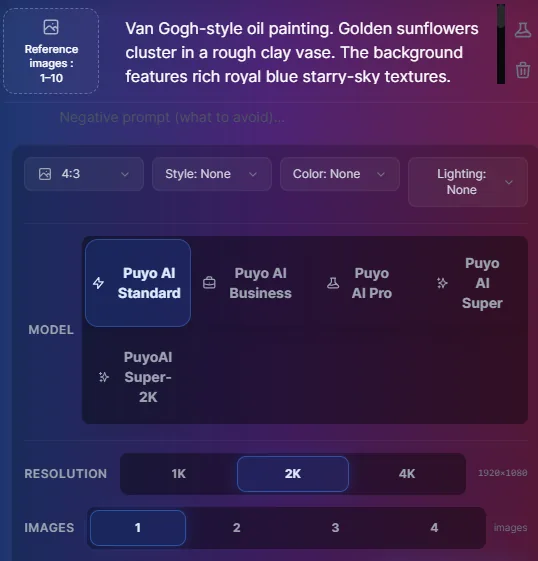
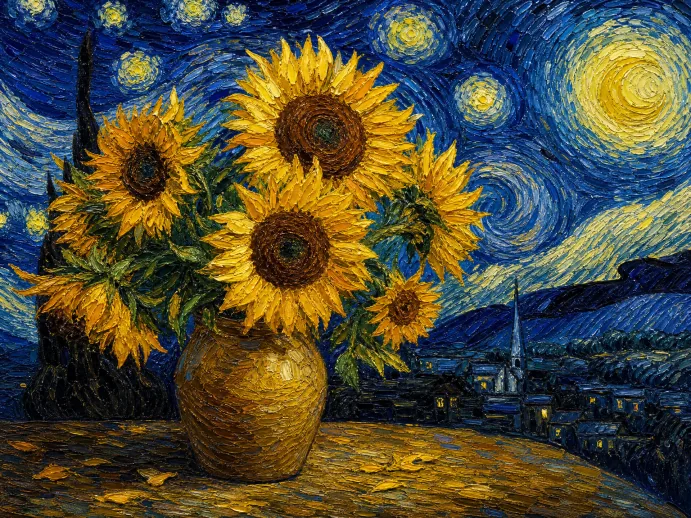
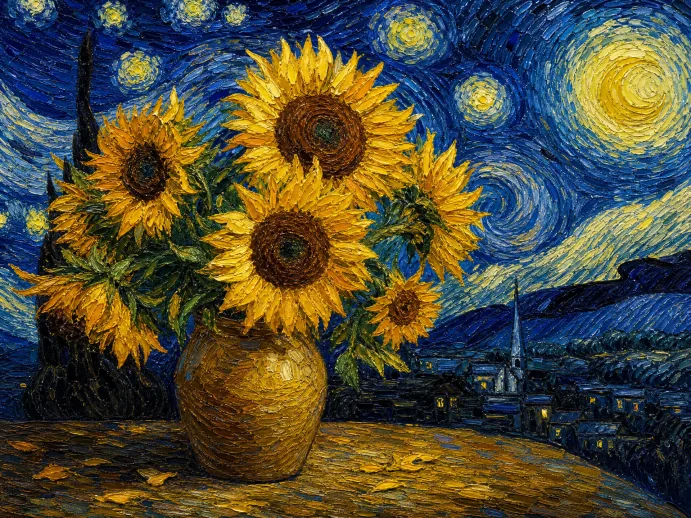
Figure 1-22 Van Gogh style: brushwork, palette, and texture lock in the master’s signature in three segments
This prompt breaks Van Gogh’s “visual signature” into three describable dimensions: brushwork (bold, thick, swirling), palette (bright yellow + cobalt blue), and texture (layered brushstrokes). That’s exactly how the Style Features segment of the six-element formula unfolds for master subjects—translating an abstract “Van Gogh feel” into concrete visual instructions.
Four Masters: Monet, Picasso, Qi Baishi, and Xu Beihong
Other masters each have their own visual language:Monet styleFocuses on fleeting light, with hazy strokes dissolving into Impressionist poetry;Picasso styleDeconstructs objects through Cubism, revealing avant-garde and plural exploration in abstract reassembly;Qi Baishi styleUses expressive ink wash for flowers, birds, fish, and insects, full of rustic, lively charm;Xu Beihong styleBlends Chinese and Western techniques, rendering galloping horses with both form and spirit, realism carrying an expressive ink spirit:
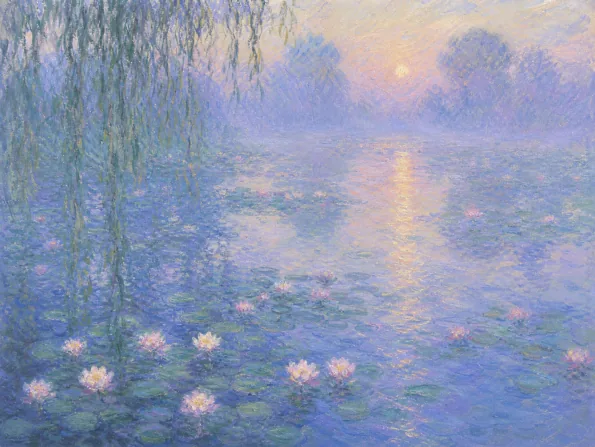
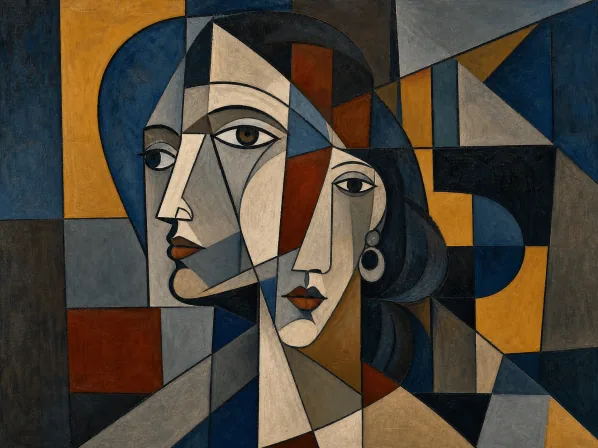
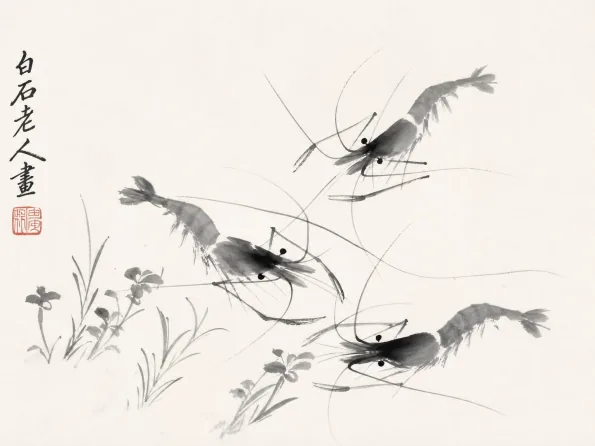
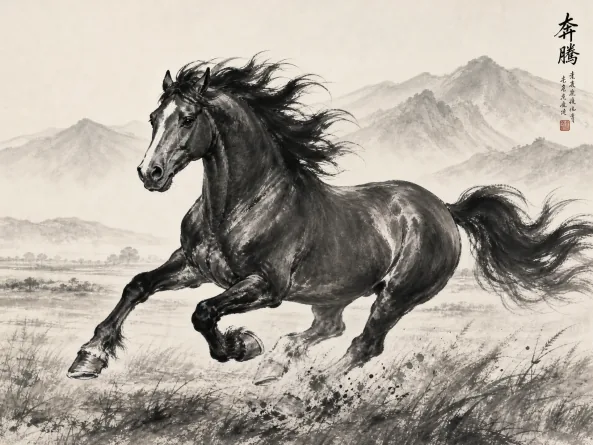
Figure 1-23 Four masters: each with a distinct set of brushwork and color keywords
Compare the four images and a pattern emerges: Eastern masters turn on ink and sensibility, Western masters on brushwork and deconstruction—judge a master’s “visual language” before choosing words, and your hit rate goes way up.
Chinese Style Hands-On: Origami Peacock
Chinese style is the visual distillation of Chinese culture and art—equally at home in classical, elegant landscapes and in modern China-chic design. Traditional creation requires precisely distilling the core visual elements of a craft and a deep grasp of the Eastern philosophy and aesthetic sensibility behind it; Puyo AI turns that first step into “medium selection”—pick a craft and write its own dedicated texture words into the prompt. Let’s start with origami.
Step one: open the Puyo AI image generation page, click the “Model” button, set the image model to “Puyo AI Standard”, and enter the prompt in the input box:
Chinese-style origami art, the core subject is a peacock in full display folded from delicate cardstock. Its tail feathers spread out layer by layer, each feather marked with precise fold lines. Soft natural side light outlines the 3D texture of the paper folds. The palette is dominated by peacock blue, gilded gold and bamboo green. Elegant and lively overall, the rendering preserves the sharp edges and gentle curves of folded paper, highlighting the exquisite beauty of traditional origami craft.
Setup: set the model to “Puyo AI Standard”, enter the prompt, then set the ratio to 1:1, resolution to 2K, and image count to 1, and click “Create”.
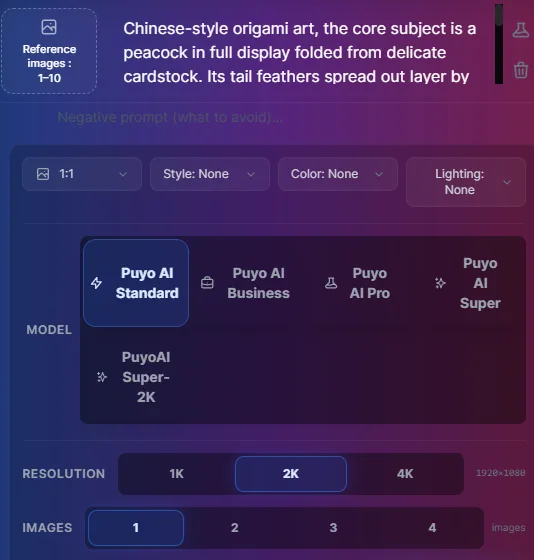
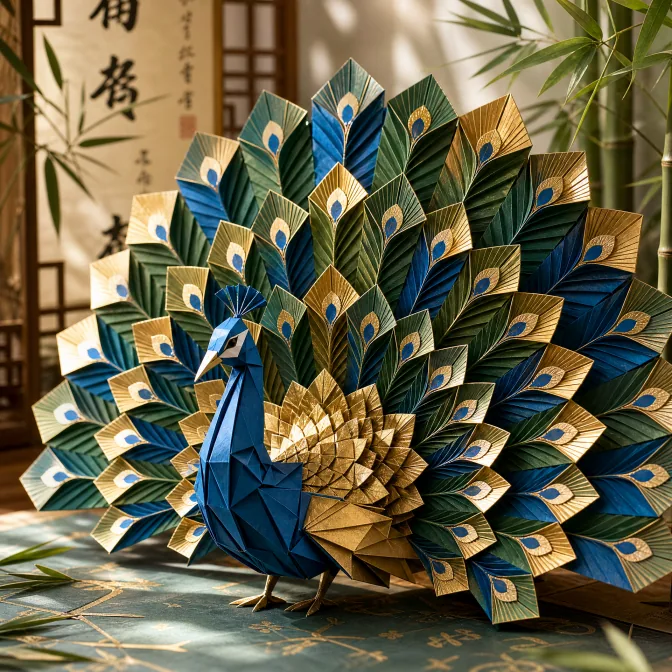
Figure 1-24 Origami peacock: medium texture words (creases, angular curvature) determine the crafted feel
Origami makes something dimensional out of a flat medium, so two lines matter most in the prompt: “every feather has crisp creases” and “soft natural side light outlines the dimensional texture of the paper”—creases give structure, side light gives volume, and together they create the crafted feel of something that could really be folded.
Four Chinese-Style Crafts: Woodblock, Shadow Puppet, Embroidery, and Dunhuang Murals
Beyond origami, Chinese style has four more classic mediums:Woodblock print styleConveys a plain, weighty aesthetic through knife-carved grain and bold color blocks;Shadow puppet styleCombines pierced silhouettes with brilliant color to create a distinctive theatrical mood;Embroidery styleTraces patterns with fine silk thread texture, at once elegant and exquisite;Dunhuang mural styleBlends Western Regions and Central Plains characteristics, expressing Silk Road romance through rich color and flowing apsaras—all carrying Chinese aesthetics and traditional cultural depth:
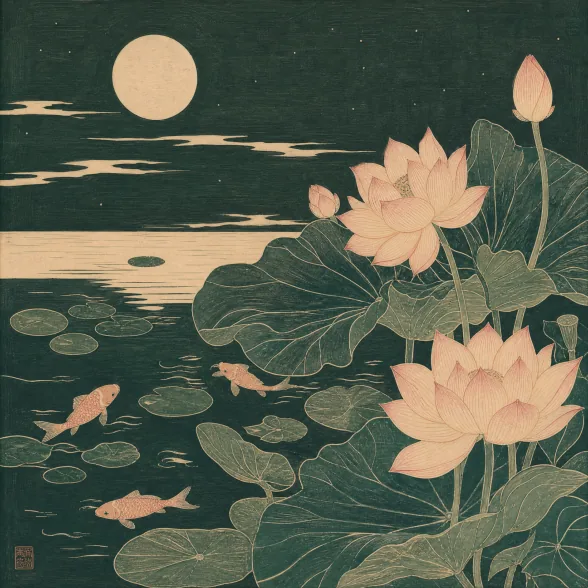
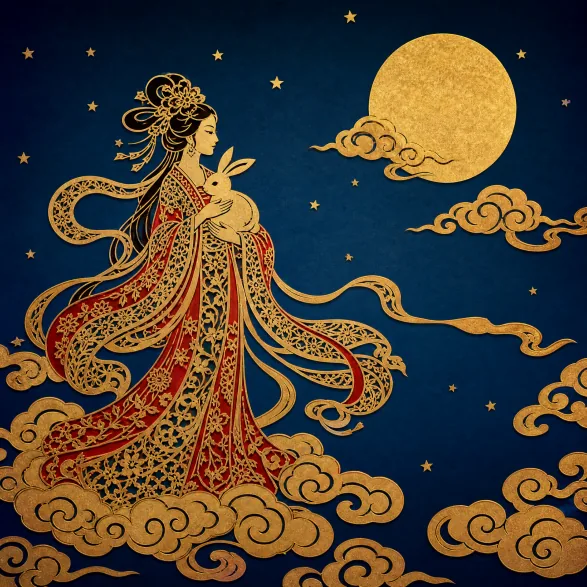
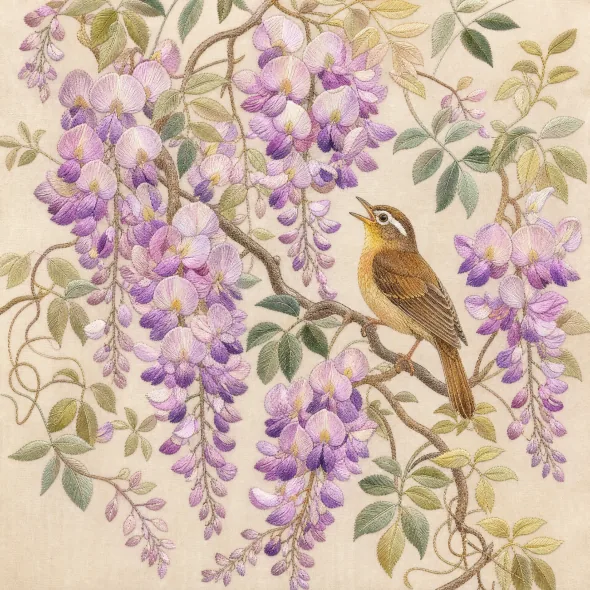
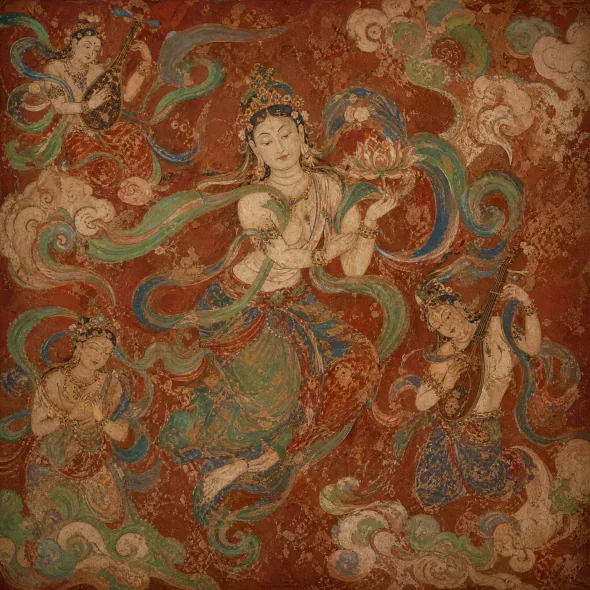
Figure 1-25 Four Chinese-style crafts: a guide to medium texture words
With this, all three sections of the Visual Presentation chapter—photography simulation, visual creation, and artistic interpretation—are complete. Looking back: a five-part formula recreates reality in photography, a four-part formula unleashes style in visual creation, and a six-element formula commands polish in artistic interpretation. Three structures, each building on the last—from “looks photographed” to “plays freely” to “has depth.” Your prompt toolkit is now complete.
FAQFrequently Asked Questions
The questions beginners ask most about this guide
Can you recreate master styles without an art background?
Yes. Traditional recreation demands deep study of a master’s creative logic, brushwork, and color preferences. Puyo AI distills all of that into the Style Features segment of a prompt—one line like “swirling brushstrokes recreate Van Gogh’s signature style” is enough to align the master’s visual signature.
What’s the most important prompt term for Van Gogh style?
Three Details: brushwork (bold, thick, visibly textured, swirling strokes), palette (mainly bright yellow and cobalt blue), and texture (layered brushstrokes on the petals). Together they make Van Gogh recognizable; drop any one and the style drifts.
Are Chinese style and period costume dramas the same thing?
Not Exactly. Chinese style emphasizes the material texture of traditional crafts—origami creases, knife-carved woodblock grain, pierced shadow-puppet silhouettes, embroidery thread texture, and the rich color of murals. Choose the medium before writing the content, and the charm will feel authentic.
How do you write an origami prompt that looks dimensional?
Crease Detail + Light for Form: “every feather has crisp creases” and “soft natural side light outlines the dimensional texture of the paper”—the illusion of depth in a flat medium rests entirely on lighting descriptions.
Can master styles be mixed?
Yes—follow the “blend Chinese and Western techniques” approach. For example, Xu Beihong’s style is itself a model of East-West fusion—realism carrying an expressive ink spirit. When mixing styles, define the dominant one and the fusion point, and the result stays coherent.
What elements must a Dunhuang mural prompt include?
Western Regions Meets Central Plains: rich color, flowing apsaras, and Silk Road romance are the three signatures; write “mural texture” or “mineral pigment texture” in the texture segment and the sense of age appears instantly.
About the Author: Julia, Veteran AI Image Creator
Years of using AI image tools for photography-grade shots, stylized illustration, and art recreation, and of guiding complete beginners. Every case, prompt, setting, and screenshot in this article comes from real generation records on the Puyo AI platform—not theory, not stitched-together stock material. This piece closes the Visual Presentation chapter, completing the loop of photography simulation, visual creation, and artistic interpretation.
Content adapted and polished from the original material “From Novice to AI Art Pro | Complete Hands-On Tutorial Collection”, with all original prompts and figures preserved. Source: https://www.puyoai.com。
Show the Masters Your Homework
Open the Puyo AI website, pick a painter or traditional craft you love, and use the six-element formula to create your own tribute.
Results are affected by model version and randomness—the same prompt will vary slightly each time it runs; run it a couple of rounds before drawing conclusions.